
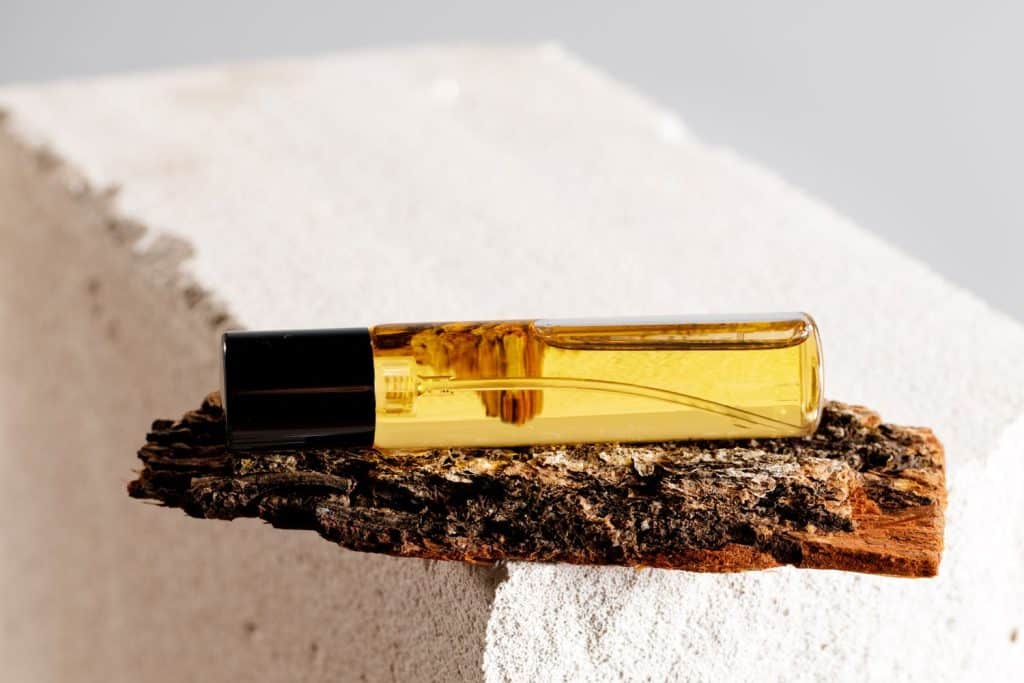
A bottle of oud oil reveals little about the time and production work behind it. Before the finished oil reaches a buyer, the trees must grow, resinous wood must be identified, and the selected material must pass through preparation, distillation, separation, inspection, and storage.
Understanding agarwood distillation in Thailand gives buyers a practical way to compare producers. The character of each oil begins with the raw material and continues to develop through decisions made at the distillery. Wood selection, preparation, equipment, heat management, collection, and storage can all contribute to differences between batches.
The Process Begins With the Tree
Agarwood forms within trees from the genus Aquilaria, including Aquilaria crassna, a species cultivated in Thailand. When a tree responds to physical injury or biological stress, resin can develop within sections of the wood. Producers identify and select these resinous sections for agarwood products and oil production.
Tree age provides one reference for assessing the raw material. Resin distribution, wood condition, and aroma must also be considered because trees of a similar age can produce different material. Oudimension reports using agarwood chips from trees aged between 15 and 30 years at its operation in Trat.
A producer managing its own plantation can retain information about cultivation, harvesting, and wood selection. Buyers can use that information to trace the material back to its growing location and determine whether the supplier controls production or obtains oil from another distillery.
Preparing the Agarwood
Selected wood must be prepared before it enters the distillation vessel. Methods vary between producers and may include sorting, cutting the wood into chips, grinding it into smaller pieces, soaking, or conditioning it with water.
Preparation determines the form and condition of the material placed in the still. Chip size, resin distribution, soaking time, and the ratio between wood and water create different production conditions. These variables can contribute to differences between oils made from the same Aquilaria species.
For buyers comparing producers, preparation is therefore a useful part of the production discussion. A supplier should be able to describe the general condition of the wood entering the still and explain whether the preparation method remains consistent across commercial batches.
How Steam and Heat Release the Oil
Oud oil is commonly produced through water-based or steam-based distillation. The prepared agarwood is placed inside a distillation vessel and heated under controlled conditions. Volatile aromatic compounds travel with the vapour into a cooling system, where the vapour condenses into liquid containing water and oil.
The oil is then separated from the hydrosol and collected for inspection and storage. Raw material, vessel design, heating conditions, distillation time, condensation, and collection practices all influence the environment in which the oil is produced.
A Thai oud distillery should be able to describe these main stages and confirm whether production takes place within its own facility. This information helps buyers understand who managed the approved batch and where its production records originated.
Experience Shapes Each Distillation
Equipment provides the physical conditions for distillation, while the operator manages how those conditions are applied to the material. The distiller assesses the prepared wood, loads the vessel, controls the heat, monitors the distillate, and decides when collection is complete.
Raw material can change between production runs. Differences in resin distribution, moisture, chip condition, and aromatic character may affect how the material behaves during processing. Experience with the same species and regional material helps a distiller recognise these changes and maintain a documented method across batches.
Intensity is only one part of evaluating the finished oil. A perfumer may need an oil that performs consistently within a formula, while a collector may be interested in the individual character of a particular distillation. Representative samples and batch information allow each buyer to assess the oil according to its intended use.
Quality Control Before Shipment
After collection, the oil moves through separation, inspection, storage, and preparation for delivery. Producers may examine its appearance, aroma, purity, and consistency before approving the batch for sale. Commercial buyers may also request a batch reference, Certificate of Analysis, product specification, and documents relevant to the destination.
Oudimension states that its team inspects oud oil before delivery, uses clean water during production, and maintains its facilities in line with Halal requirements. Buyers can compare these practices with the supporting records provided for the oil and shipment under discussion.
When evaluating an oud oil factory in Trat, buyers can ask how the company records production, identifies finished batches, stores collected oil, and prepares documentation. These details show whether the sample, batch description, and delivered product can be followed through the same production record.
Thai oud oil passes through a connected sequence of cultivation, wood selection, preparation, distillation, separation, inspection, and storage. Each stage adds information that buyers can use when comparing producers. Following that information from the plantation to the finished bottle provides a stronger basis for evaluating origin, batch character, production control, and readiness for shipment.